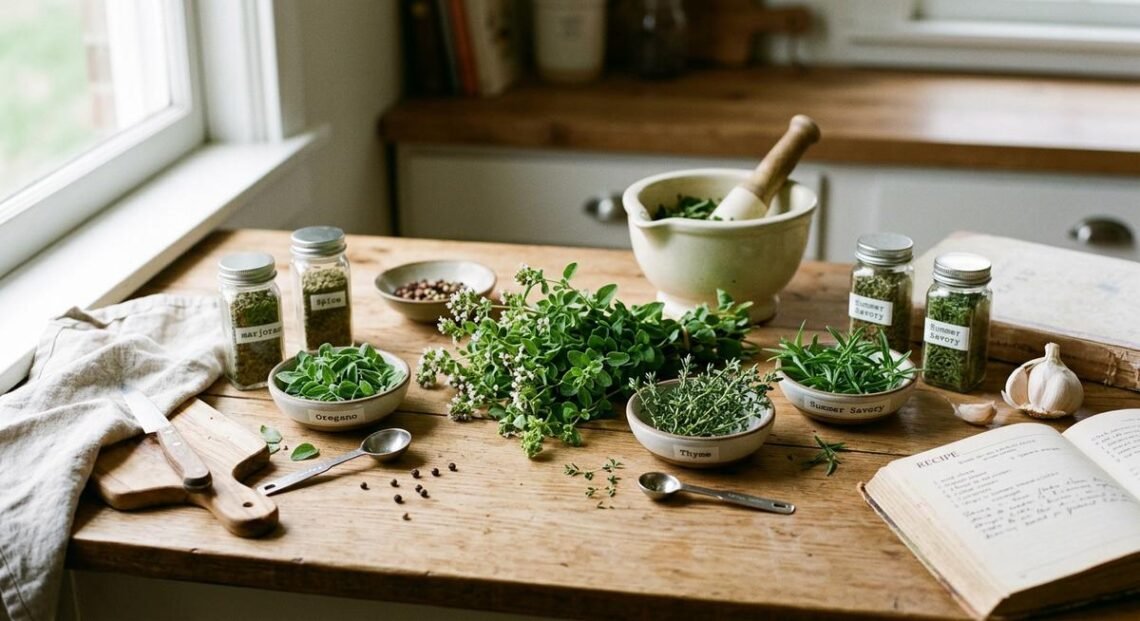
The pan is hot, the recipe calls for marjoram, and there’s none in the cabinet. Every cook has been there. A well-chosen marjoram alternative can carry a dish beautifully — but only when you know what you’re actually trying to replace and how much substitute to use.
Marjoram is a quietly distinctive herb: warm, piney, with a sweetness that oregano lacks and a floral, faintly citrusy edge that separates it from thyme. It’s mild enough to use generously, which is exactly why a careless swap can throw off a recipe’s balance.
The right substitute depends on three things most sources skip entirely: whether the recipe calls for fresh or dried marjoram, which dish you’re making, and the exact conversion ratio. A straight one-to-one swap isn’t always the answer.
What Does Marjoram Taste Like? (And Why It’s Hard to Replace)
Marjoram (Origanum majorana) belongs to the mint family and shares a genus with oregano, yet the two herbs land very differently on the palate. Understanding marjoram’s specific flavor fingerprint is the fastest way to pick the right substitute.
Marjoram’s Flavor Profile Explained
The herb’s warmth comes primarily from terpinen-4-ol and cis-sabinene hydrate — aromatic compounds that produce its signature pine-sweet note. According to research published in the Journal of Agricultural and Food Chemistry, these terpenes give marjoram a gentler, more floral character compared to oregano’s dominant carvacrol and thymol, which create that sharper, almost medicinal punch.
Thyme occupies a different lane entirely. Earthier, more savory, with a faintly woody edge — it lacks the floral lift that makes marjoram so useful in delicate Mediterranean cooking. Marjoram is the herb you reach for when you want fragrance without aggression.
| Herb | Primary Flavor Notes | Intensity | Best Cooking Application |
|---|---|---|---|
| Marjoram | Sweet, floral, faint citrus, pine | Mild | Delicate sauces, sausages, Mediterranean dishes |
| Oregano | Sharp, pungent, slightly bitter | Strong | Pizza, robust tomato sauces, grilled meats |
| Thyme | Earthy, savory, faintly woody | Medium | Soups, stews, roasted vegetables |
| Basil | Sweet, peppery, slight anise | Medium | Tomato sauces, salads, light pasta |
Fresh vs. Dried Marjoram: Why It Changes Everything
Fresh marjoram is genuinely fragile. Its volatile oils dissipate quickly under heat, which is why most recipes call for adding fresh leaves in the final minute of cooking. Dried marjoram, by contrast, is more concentrated and built for long, slow applications — stir it in early so heat has time to bloom its flavor.
A substitute that works beautifully for dried marjoram in a slow-braised lamb shoulder may completely overpower a fresh herb vinaigrette. The general conversion: 1 teaspoon dried marjoram equals roughly 1 tablespoon (3 teaspoons) of fresh. Keep that ratio in mind as you evaluate each alternative below.
The 7 Best Marjoram Substitutes (With Exact Swap Ratios)
Oregano is the single closest marjoram alternative for most recipes, but the best swap depends on your specific dish and whether you’re working with fresh or dried herb. These seven substitutes are ranked by flavor similarity, each paired with a tested conversion ratio and the cooking contexts where they perform best.
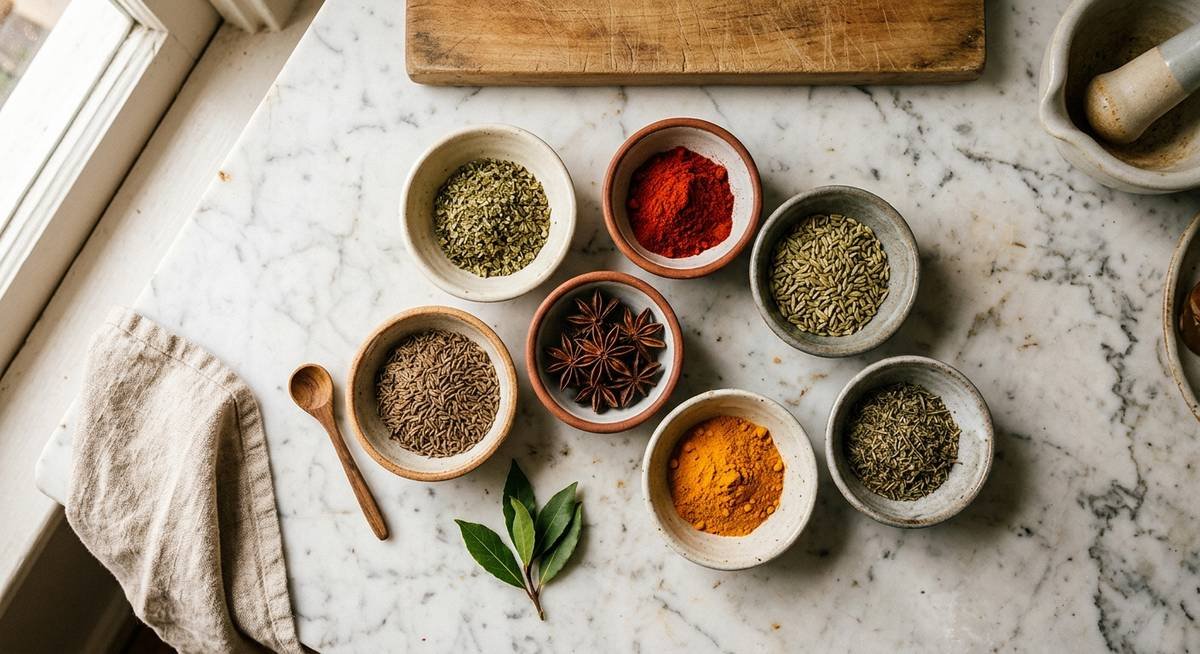
| Substitute | Swap Ratio (per 1 tsp dried marjoram) | Flavor-Match Score | Best For | Fresh or Dried |
|---|---|---|---|---|
| Oregano | 3/4 tsp | 9/10 | Pizza sauce, pasta, roasted lamb, Greek dishes | Both |
| Summer Savory | 1 tsp | 8/10 | Bean dishes, sausages, herb rubs, roasted vegetables | Both |
| Thyme | 1 tsp | 7/10 | Soups, stews, roasted chicken, potato dishes | Both |
| Herbes de Provence | 1 tsp (blend) | 7/10 | Roasted vegetables, braises, Mediterranean mains | Dried |
| Basil | 1 tsp | 6/10 | Tomato sauces, salads, light pasta dishes | Fresh preferred |
| Sage | 1/2 tsp | 5/10 | Sausages, stuffing, pork dishes, brown butter | Both |
| Tarragon | 3/4 tsp | 5/10 | Chicken, egg dishes, French sauces, vinaigrettes | Fresh preferred |
Oregano
Oregano is the closest single-herb marjoram alternative. Both belong to the Origanum genus and share overlapping terpene profiles, which is why they’re sometimes confused at the grocery store. The critical difference is intensity — oregano runs noticeably sharper and more pungent.
Use 3/4 tsp dried oregano for every 1 tsp dried marjoram. Dialing back the quantity compensates for oregano’s stronger bite. For fresh swaps, use the same 3:4 ratio with fresh leaves. Best in pizza sauce, tomato-based pastas, roasted lamb, and Greek dishes where a bolder savory backbone is welcome.
Summer Savory
Summer savory (Satureja hortensis) is the underrated star of this list. It mirrors marjoram’s warm, peppery sweetness more closely than most cooks expect — which makes sense, given that German cuisine traditionally groups the two herbs together in sausage-making. The McCormick Science Institute notes that savory’s flavor sits between thyme and marjoram on the intensity scale.
Swap at a 1:1 ratio for both fresh and dried. Summer savory works especially well in bean dishes, sausages, herb rubs, and roasted Mediterranean vegetables. Winter savory is slightly more bitter and intense — if that’s all you have, reduce to 3/4 tsp.
Thyme
Thyme is the most common marjoram alternative simply because nearly every kitchen stocks it. It shares some of marjoram’s earthy warmth but misses the floral sweetness. The result is a substitute that works well in heartier dishes where delicacy isn’t the priority.
Swap at a 1:1 ratio. Both fresh and dried thyme integrate easily into soups, stews, roasted chicken, and potato-based dishes. Where thyme falls short: anything requiring marjoram’s lighter, perfumed quality — herb-crusted fish, for example, or a finishing sprinkle on bruschetta.
Herbes de Provence / Italian Seasoning
When no single herb will do, a blend can. Herbes de Provence typically contains marjoram alongside thyme, rosemary, oregano, and savory — so you’re getting partial coverage from the real thing. Italian seasoning follows a similar logic with oregano, basil, and thyme carrying the mix.
Use 1 tsp of the blend for every 1 tsp dried marjoram. The trade-off: blends introduce additional flavors (rosemary’s sharpness, basil’s sweetness) that may shift the dish’s profile. Best for roasted vegetables, braises, and Mediterranean mains where a complex herb backbone is a feature, not a bug.
Basil
Fresh basil captures marjoram’s sweetness better than most herbs on this list. Its peppery, slightly anise-like character overlaps enough to work in lighter Mediterranean applications — tomato sauces, caprese-style salads, and delicate pasta dishes.
Swap at a 1:1 ratio, but only with fresh basil. Dried basil loses most of its aromatic charm and turns dusty; it makes a poor marjoram substitute. Add fresh basil at the very end of cooking, just as you would with fresh marjoram, to preserve its volatile oils.
Sage
Sage is the boldest option here — earthy, slightly bitter, and intensely aromatic. It doesn’t mimic marjoram’s delicacy, but in hearty dishes where marjoram plays a supporting role, sage fills that savory anchor convincingly.
Use only 1/2 tsp sage for every 1 tsp marjoram. Sage is potent enough to overwhelm a dish at full measure. Best for sausage seasoning, Thanksgiving-style stuffing, pork roasts, and brown butter sauces. Skip it entirely for anything light or bright — sage will bulldoze those flavors.
Tarragon
Tarragon is a wildcard. Its anise-like sweetness echoes marjoram’s floral quality in a completely different key — less Mediterranean, more French. It works when the dish calls for elegance rather than rustic warmth.
Use 3/4 tsp fresh tarragon for every 1 tsp fresh marjoram. Tarragon pairs best with chicken, egg dishes (omelets, quiche), French-inspired cream sauces, and vinaigrettes. Avoid it in tomato-heavy or heavily spiced dishes, where the anise note will clash.
When to Use a Spice Blend Instead of a Single Herb
Sometimes the pantry is bare and no single herb comes close. Spice blends offer a practical workaround, especially for dried marjoram in slow-cooked dishes. The key is choosing a blend whose flavor profile leans Mediterranean.
- Za’atar: Contains oregano, thyme, sesame seeds, and sumac. The sumac adds a tangy brightness that loosely echoes marjoram’s citrus note. Use 1 tsp za’atar per 1 tsp marjoram in flatbreads, roasted vegetables, and grain bowls.
- Poultry seasoning: Typically a mix of sage, thyme, marjoram, rosemary, and black pepper. Since it already contains marjoram, use it at a 1:1 ratio for roasted chicken, turkey, and stuffing recipes.
- Greek seasoning: Usually combines oregano, garlic, onion, and marjoram. Swap at 1:1 for Mediterranean marinades and grilled meats, but account for the added garlic and onion presence.
Frequently Asked Questions
What is the closest herb to marjoram?
Oregano is the closest single-herb substitute. Both belong to the same genus (Origanum) and share key aromatic compounds, though oregano is more intense. Use 3/4 tsp oregano for every 1 tsp marjoram to balance the difference in strength.
Can I use oregano instead of marjoram?
Yes — oregano is the most reliable marjoram alternative. Reduce the quantity by about 25% (3/4 tsp oregano per 1 tsp marjoram) because oregano’s flavor is sharper and more pungent. The swap works in both fresh and dried form.
Is marjoram the same as thyme?
No. Marjoram and thyme belong to the same plant family (Lamiaceae) but have distinctly different flavor profiles. Marjoram is sweeter, more floral, and milder. Thyme is earthier, more savory, and slightly woody. They can substitute for each other at a 1:1 ratio, but the dish will taste noticeably different.
What can I use instead of marjoram in sausage?
Summer savory is the best marjoram substitute for sausage seasoning — it matches the warm, peppery sweetness that marjoram brings to cured and fresh sausages. Use a 1:1 swap. Sage at half measure is the second-best option, adding depth without overpowering the meat.
Can I just leave marjoram out of a recipe?
In many recipes, yes. If marjoram is one herb among several in a spice mix, omitting it won’t ruin the dish — other herbs will compensate. But in recipes where marjoram is the primary or only herb (sausage seasoning, certain Greek dishes), skipping it entirely leaves a noticeable gap. Use one of the substitutes above instead.
What is the difference between marjoram and oregano?
Both are species within the Origanum genus, but they differ in intensity and flavor emphasis. Marjoram is milder, sweeter, and more floral, driven by terpinen-4-ol. Oregano is bolder, more pungent, and slightly bitter, dominated by carvacrol. In cooking, marjoram suits delicate dishes while oregano holds up in robust, high-heat applications.
Picking the Right Marjoram Alternative
Oregano covers most situations — just use less of it. For sausages and bean dishes, summer savory is the better call. And when the recipe needs marjoram’s floral finesse in a finishing role, fresh basil or tarragon can carry that lightness.
The swap ratio matters more than the herb choice itself. Too much of any substitute shifts the dish’s balance; too little leaves a flat spot. Start with the ratios above, taste as you go, and adjust. That’s how every good cook operates — marjoram or not.