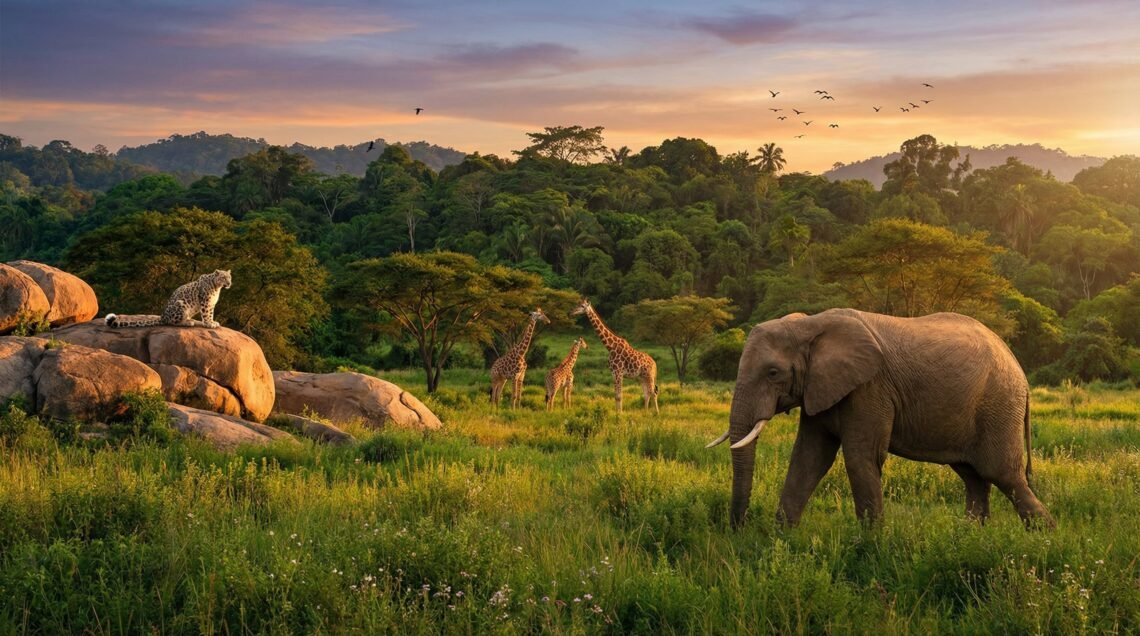
Did you know that over 700 million people visit zoos and aquariums each year? That’s more than the attendance of all major sporting events combined. For generations, zoos have been our primary window into the animal kingdom. But what if that window is changing? What if the very concept of a zoo is evolving into something more profound, more ethical, and ultimately, more impactful?
Enter zooskooñ. It’s a term you might have seen bubbling up online, a concept that’s quietly reshaping our understanding of wildlife conservation. This isn’t just another buzzword. It represents a fundamental shift away from entertainment-focused animal exhibits and toward immersive, conservation-driven sanctuaries where animal welfare, scientific research, and public education are at the forefront.
This article is your definitive guide to the world of zooskooñ. We’ll explore its origins, unpack its core principles, and showcase real-world examples of how this model is creating a more sustainable future for wildlife. By the time you finish reading, you’ll not only understand what zooskooñ is, but you’ll also see why it matters—and how it’s inspiring a new generation of conservationists.
Understanding Zooskooñ: Beyond the Traditional Zoo Model
The term zooskooñ (pronounced zoo-skoon) has emerged as a powerful descriptor for a new philosophy in wildlife care and conservation. While its exact linguistic origins are debated, with some attributing it to a blend of ancient Greek and modern Scandinavian roots symbolizing a ‘school of animals’ or ‘animal garden,’ its conceptual meaning is clear. It represents a move beyond the traditional zoo model, which historically prioritized human entertainment, towards a framework where the needs of the animals and the planet are paramount.
So, how does a zooskooñ differ from the zoos of the past? The distinction is significant. Traditional zoos often featured animals in sterile, undersized enclosures, with little regard for their natural behaviors or psychological well-being. The primary goal was exhibition. A zooskooñ, by contrast, is designed as a conservation and education engine. It is a place where immersive, naturalistic habitats are meticulously crafted to mimic wild environments, allowing animals to thrive, not just survive. The focus shifts from passive viewing to active engagement, where visitors become participants in a larger story of conservation.
This model isn’t necessarily about a single, official brand of zoos. Rather, it’s a set of principles and standards being adopted by forward-thinking wildlife institutions around the globe. These facilities are reimagining their purpose, transforming from mere collections of animals into dynamic hubs for scientific research, species preservation, and public education. The rise of the zooskooñ concept reflects a growing public consciousness, a demand for more ethical and meaningful interactions with the natural world. It’s a response to the urgent call for a more responsible stewardship of our planet’s biodiversity.
How Zoos Have Transformed: From Entertainment to Conservation
To truly appreciate the innovation of the zooskooñ model, we must first understand the journey of zoos themselves. The concept of keeping wild animals for public display dates back thousands of years, but the modern zoo as we know it emerged in the 19th century. These early institutions, often called menageries, were primarily products of their time—symbols of colonial power and human dominance over nature. Animals were housed in small, barren cages, arranged like specimens in a museum, with little thought given to their complex social and environmental needs. The focus was purely on spectacle and entertainment.
A significant shift began in the mid-20th century, spurred by a growing scientific understanding of animal behavior and a rising public consciousness about animal welfare. The sterile cages slowly gave way to more naturalistic enclosures, and the focus began to pivot from pure entertainment to a dual mission of education and conservation. Zoos started to see themselves as arks, playing a crucial role in preserving species that were facing extinction in the wild. This era saw the birth of the first cooperative breeding programs and a more professionalized approach to animal husbandry, guided by veterinarians and zoologists.
The ethical landscape continued to evolve. Documentaries and scientific studies laid bare the psychological suffering of intelligent animals in inadequate environments, leading to widespread public debate. The question was no longer just how to keep animals, but why. This soul-searching pushed the most progressive institutions to double down on their conservation mandate. The zooskooñ model is the culmination of this journey—a decisive step away from the legacy of entertainment and a full embrace of a new identity as centers for conservation excellence. It represents the transition from a place where we simply look at animals to a place where we actively work to save them.
The Five Pillars: Foundational Principles Behind Zooskooñ
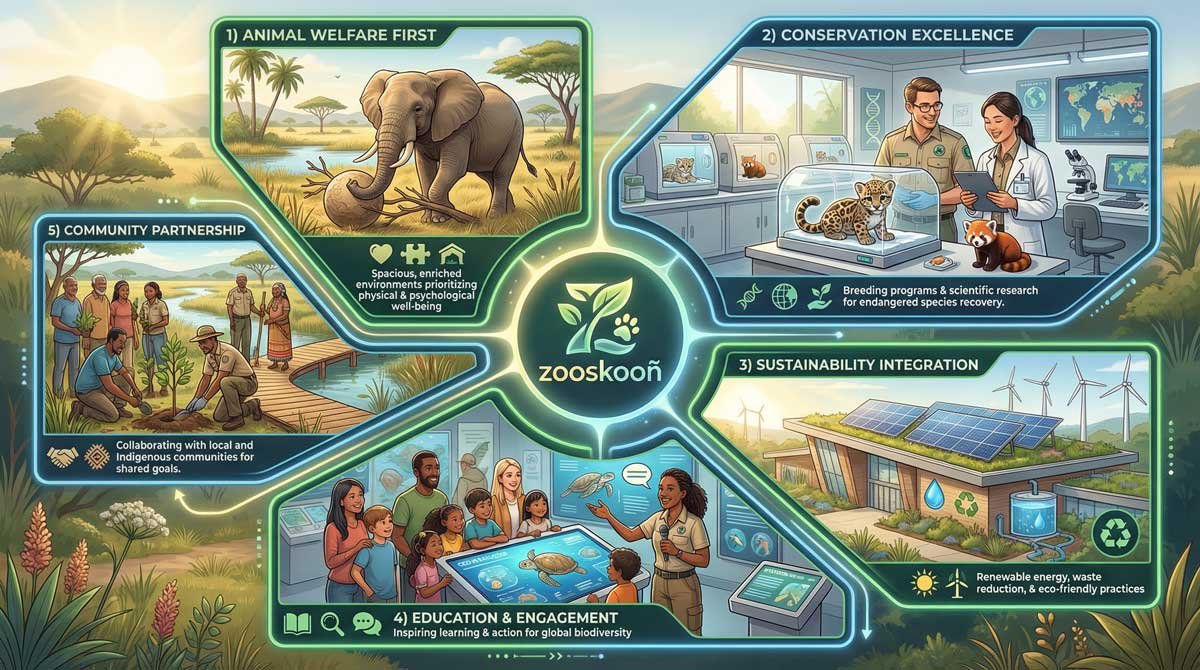
The zooskooñ philosophy is built upon five interconnected pillars that guide every aspect of its operation, from habitat design to community engagement. These principles represent a holistic approach to wildlife conservation, ensuring that the well-being of animals, the health of the planet, and the education of the public are all held in the highest regard. Together, they form a blueprint for the ethical and sustainable wildlife institution of the 21st century.
1. Animal Welfare First: This is the non-negotiable foundation of the zooskooñ model. It dictates that the physical and psychological well-being of every animal is the top priority. This principle is manifested through the creation of vast, naturalistic habitats that encourage species-appropriate behaviors like foraging, climbing, and socializing. It also involves comprehensive behavioral enrichment programs designed to stimulate the animals’ minds, as well as world-class veterinary care that is both proactive and preventative. The goal is to create an environment where animals don’t just survive, but thrive.
2. Conservation Excellence: A zooskooñ is, at its core, a conservation organization. This pillar ensures that every action taken serves a larger conservation purpose. This includes scientifically managed breeding programs for endangered and threatened species, with the ultimate goal of reintroduction into protected wild habitats. It also involves direct support for in-situ conservation projects, funding anti-poaching patrols, restoring degraded ecosystems, and conducting vital research that contributes to our global understanding of biodiversity and extinction threats.
3. Sustainability Integration: Recognizing that you cannot protect animals without protecting the planet, this pillar embeds environmental responsibility into the very fabric of the institution. Zooskooñ facilities are designed and operated to minimize their ecological footprint. This includes the use of renewable energy sources like solar and geothermal, advanced water conservation and recycling systems, comprehensive waste reduction and composting programs, and the use of sustainable, locally-sourced materials in construction. The aim is to operate in harmony with the local ecosystem, becoming a model of green architecture and sustainable practices.
4. Education & Engagement: This pillar transforms the visitor from a passive spectator into an active participant in conservation. The goal is to inspire a deeper connection with the natural world and a greater understanding of the threats it faces. This is achieved through immersive, story-driven exhibits that explain the ecological role of each species, interactive learning opportunities that engage all ages, and formal educational programs that align with school curricula. A zooskooñ is a place of learning, designed to empower visitors with the knowledge and motivation to become advocates for wildlife.
5. Community Partnership: A zooskooñ does not exist in a vacuum. This final pillar ensures that the institution is a positive force for the local community. This involves creating local employment opportunities, sourcing goods and services from local businesses, and developing meaningful partnerships with local schools and community groups. In many cases, it also includes collaborating with Indigenous communities, honoring their traditional knowledge of the land and wildlife, and ensuring they are partners and beneficiaries in conservation efforts. This approach builds a strong, supportive relationship between the institution and its surrounding community, creating a powerful alliance for conservation.
Prioritizing Animal Wellbeing: How Zooskooñ Addresses Ethical Concerns
At the heart of the zooskooñ model lies a profound commitment to animal welfare, a commitment that directly confronts the ethical dilemmas of keeping animals in human care. This is not simply about providing food and shelter; it is a science-based approach to ensuring that every animal experiences a high quality of life, both physically and psychologically. This dedication to wellbeing is the primary response to the valid criticisms that have been leveled against traditional zoos for decades.
The first and most visible element of this approach is the habitat design. Gone are the concrete floors and iron bars of the past. In their place are sprawling, complex environments that are meticulously engineered to replicate the animal’s natural habitat. These spaces provide opportunities for climbing, swimming, foraging, and seeking privacy, allowing animals to engage in the full spectrum of their natural behaviors. For a species like the orangutan, this means a complex, three-dimensional environment with ample climbing structures. For a snow leopard, it means a rocky, mountainous terrain with high vantage points. The design philosophy is simple: the habitat must serve the animal’s needs, not the visitor’s convenience.
Beyond the physical space, behavioral enrichment is a critical component of daily care. A dedicated team of specialists designs a constantly changing array of challenges and stimuli to keep the animals’ minds active and engaged. This can range from puzzle feeders that require problem-solving to obtain food, to the introduction of new scents and objects that encourage exploration. This addresses one of the biggest challenges of animal care: preventing the boredom and stress that can arise from a predictable environment. When people ask, “What is the hardest animal to keep in the zoo?” the answer often isn’t about size or strength, but about intelligence. Highly cognitive animals like great apes, dolphins, and elephants require immense levels of mental stimulation, making them some of the most challenging species to care for ethically. The zooskooñ model meets this challenge head-on with robust, individualized enrichment plans.
Finally, transparency and a commitment to continuous improvement are key. Zooskooñ facilities actively participate in accreditation programs run by organizations like the Association of Zoos & Aquariums (AZA) and the World Association of Zoos and Aquariums (WAZA), which set rigorous, science-based standards for animal care. They are transparent about their practices, openly discussing the challenges they face and the steps they are taking to address them. This honest conversation, backed by a deep and unwavering commitment to the animals themselves, is what truly sets the zooskooñ model apart.
Making a Difference: Real Conservation Wins Through Zooskooñ Initiatives
The most compelling argument for the existence of modern wildlife institutions is their tangible impact on conservation. A zooskooñ is not just a sanctuary; it is an active participant in the global fight to save species from extinction. This is where the model truly proves its worth, moving beyond theory and into the realm of real-world results. When people ask, “Why are zoos good?” the answer can be found in the growing list of species that would no longer exist without the intervention of these dedicated institutions.
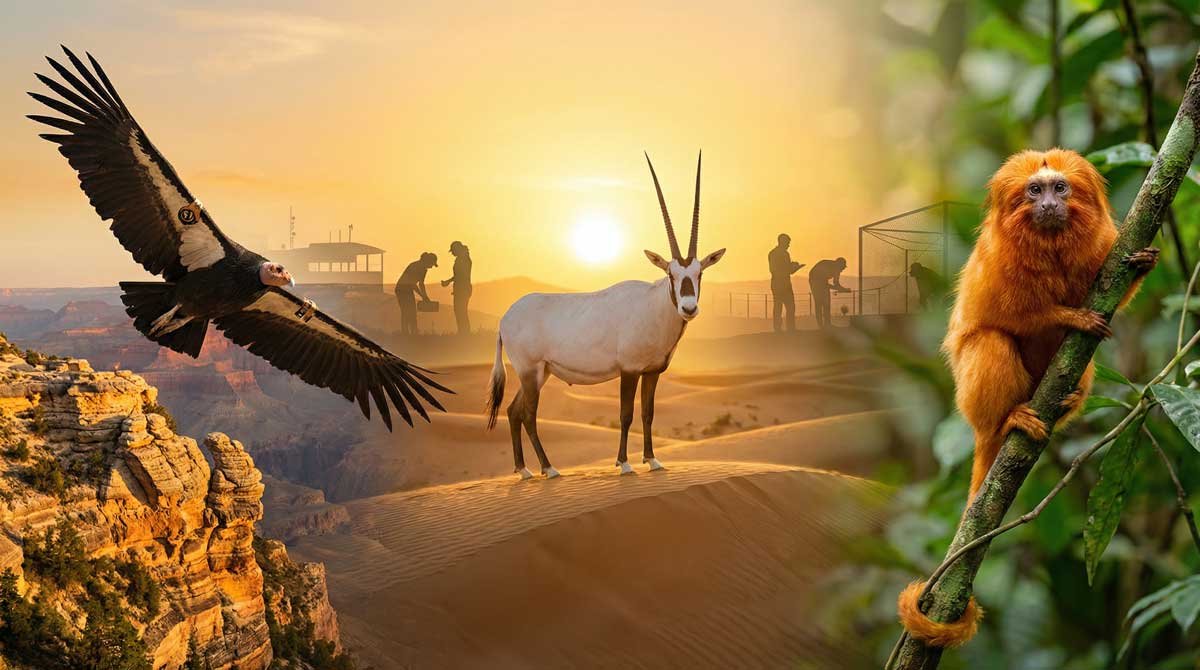
One of the most dramatic examples of this is the story of the California Condor. By the 1980s, this magnificent bird, with a wingspan of nearly 10 feet, was on the brink of extinction, with only 22 individuals remaining in the wild. In a last-ditch effort to save the species, a controversial decision was made to bring all remaining condors into human care. Zoos, including the San Diego Zoo Safari Park and the Los Angeles Zoo, became the species’ last hope. Through a painstaking and scientifically managed breeding program, the population was slowly rebuilt. Today, thanks to these efforts, there are over 500 California Condors, with a significant portion flying free in their native habitat. This is a direct result of the conservation breeding programs that are a cornerstone of the zooskooñ model.
This is not an isolated story. The Arabian Oryx, a stunning desert antelope, was hunted to extinction in the wild in the 1970s. It was brought back from the brink through a similar breeding program, initiated by the Phoenix Zoo and other partners. The Golden Lion Tamarin, a tiny, vibrant primate from the rainforests of Brazil, was saved through the coordinated efforts of zoos around the world, working in partnership with the Brazilian government. These success stories are a powerful testament to the role that ethical wildlife institutions can play. They are not just lifeboats for endangered species; they are engines of recovery.
Beyond breeding programs, zooskooñ facilities contribute to conservation in numerous other ways. They fund and participate in habitat restoration projects, helping to rebuild the ecosystems that endangered species depend on. They support anti-poaching patrols in critical biodiversity hotspots. And they conduct groundbreaking research in areas like animal health, genetics, and reproductive biology, providing the scientific knowledge that underpins global conservation efforts. The financial investment is staggering, with AZA-accredited institutions alone contributing over $230 million annually to conservation projects in the field. This is the real, measurable impact of the zooskooñ model—a story of hope, recovery, and a deep, abiding commitment to preserving the planet’s biodiversity for future generations.
Immersive Learning: How Visitors Connect with Conservation
A visit to a zooskooñ is a fundamentally different experience from a trip to a traditional zoo. The design philosophy is not just about showing you an animal, but about immersing you in its world. It is an invitation to connect with nature on a deeper level and to understand the intricate web of life that connects us all. This focus on immersive, educational experiences is a key differentiator of the zooskooñ model, transforming a simple day out into a powerful opportunity for learning and inspiration.
The journey often begins with the habitats themselves. Instead of looking at an animal through multiple layers of glass and bars, you might find yourself walking through a vast, open-air aviary, with birds flying freely around you. You might follow a path that winds through a dense, humid rainforest environment, catching glimpses of primates in the canopy above. These multi-species, ecosystem-based habitats create a sense of discovery and exploration, allowing for more natural and spontaneous animal encounters. The goal is to make the visitor feel like a guest in the animal’s home, fostering a sense of respect and wonder.
This immersive environment is layered with a rich tapestry of educational opportunities. These are not the dry, text-heavy signs of the past. Instead, you’ll find interactive displays that allow you to, for example, compare your arm span to that of a gibbon, or use a thermal camera to see how a polar bear stays warm. You’ll encounter passionate, knowledgeable educators and volunteers stationed throughout the park, ready to share stories and answer questions. You might even have the opportunity to participate in a citizen science project, helping to collect data that will be used in real conservation research.
For those seeking a more structured experience, a wide array of programs are available. These can range from behind-the-scenes tours that offer a glimpse into the complex operations of the facility, to workshops that teach children about the importance of recycling and sustainability. Many zooskooñ institutions have developed extensive programs for school groups, with curricula that are carefully aligned with state and national science standards. These programs provide a unique, hands-on learning experience that simply cannot be replicated in a classroom. By making education engaging, accessible, and inspiring, the zooskooñ model empowers visitors of all ages to become lifelong learners and passionate advocates for the natural world.
Green Practices: How Zooskooñ Leads in Environmental Stewardship
The commitment of a zooskooñ to conservation extends far beyond the animals in its care. It is a deep-seated philosophy of environmental stewardship that permeates every aspect of its operations. This holistic approach recognizes that the long-term survival of wildlife is inextricably linked to the health of our planet. Consequently, these institutions are pioneering innovative, sustainable practices, transforming their campuses into living laboratories for green technology and responsible resource management.
Energy consumption is one of the most significant environmental impacts for any large facility. Zooskooñ institutions are tackling this challenge head-on by investing heavily in renewable energy. It is now common to see vast solar arrays covering parking lots and rooftops, generating a significant portion of the facility’s electricity needs. Some are even exploring geothermal heating and cooling systems, harnessing the stable temperature of the earth to reduce their reliance on fossil fuels. These initiatives not only shrink the institution’s carbon footprint but also serve as a powerful, large-scale demonstration of the viability of renewable energy to the millions of people who visit each year.
Water is another precious resource that is managed with meticulous care. Many facilities have implemented sophisticated water conservation and recycling systems. Rainwater is harvested from rooftops and stored in large cisterns for use in irrigation and habitat maintenance. The water from animal habitats is often passed through a series of natural filtration systems, such as constructed wetlands, before being recycled and reused. These closed-loop systems dramatically reduce the facility’s demand on local water supplies, a particularly critical issue in water-scarce regions.
Waste reduction is also a top priority. Comprehensive recycling and composting programs are standard practice, diverting a huge percentage of the facility’s waste stream from landfills. This includes everything from visitor-generated waste like plastic bottles and food containers to the enormous amount of organic waste produced by the animals themselves. Many zoos now compost all of their animal manure and bedding, turning it into a nutrient-rich soil amendment that is used to fertilize the lush gardens throughout the park. Through these and many other initiatives, the zooskooñ model is setting a new standard for environmental responsibility, proving that it is possible to operate a world-class visitor attraction in a way that is gentle on the earth.
Smart Facilities: How Technology Enhances Animal Care and Research
Technology is a powerful ally in the zooskooñ mission to provide the highest standards of animal care and to advance the science of conservation. Far from being intrusive, modern technology is being used in subtle and innovative ways to monitor animal health, enrich their lives, and provide researchers with unprecedented insights into their behavior. These smart facilities are leveraging cutting-edge tools to create a safer, healthier, and more stimulating environment for the animals who call them home.
A key area of innovation is in non-invasive health monitoring. Keepers can now use thermal imaging cameras to detect signs of inflammation or infection without ever having to touch the animal. Sophisticated acoustic monitoring systems can analyze an animal’s vocalizations to identify subtle changes that might indicate stress or illness. Some institutions are even experimenting with AI-powered video analysis, where algorithms are trained to recognize specific behaviors and alert keepers to any deviations from the norm. This allows for early intervention and a more proactive approach to veterinary care, dramatically improving health outcomes.
Technology is also being used to create more dynamic and responsive habitats. Smart environmental control systems can automatically adjust the temperature, humidity, and lighting in a habitat to mimic the natural daily and seasonal cycles of the animal’s native environment. This is particularly important for species with very specific environmental needs, such as amphibians and reptiles. Other systems can be used to automate aspects of enrichment, for example, by randomly scattering food throughout a habitat at different times of the day to encourage natural foraging behaviors.
For researchers, technology is opening up new frontiers of discovery. Tiny, lightweight GPS trackers can be fitted to birds to map their flight patterns within a large aviary, providing valuable data that can be used to design better habitats. Advanced genetic sequencing technologies are being used to manage the genetic diversity of breeding programs, ensuring the long-term health and viability of endangered species. By embracing technology in a thoughtful and ethical manner, zooskooñ institutions are not only improving the lives of the animals in their care but are also accelerating the pace of conservation science.
Beyond the Gates: Economic Benefits and Community Development
The impact of a zooskooñ extends far beyond its role as a center for animal welfare and conservation. These institutions are powerful economic engines and vital community partners, creating a ripple effect of positive change that benefits the entire region. This is a crucial, yet often overlooked, aspect of their mission. By integrating themselves into the social and economic fabric of their communities, they build a broad base of support that is essential for their long-term success.
One of the most direct economic benefits is job creation. A modern wildlife institution is a complex operation that requires a diverse and highly skilled workforce. This includes not only animal care specialists and veterinarians but also educators, researchers, horticulturists, maintenance staff, guest services professionals, and administrative personnel. These are stable, year-round jobs that provide a significant boost to the local economy. Furthermore, these institutions are major purchasers of local goods and services, supporting a wide network of suppliers, from local farms that provide fresh produce for the animals to construction companies that help build and maintain the facilities.
The tourism revenue generated by a zooskooñ is another major economic driver. As world-class destinations, they attract millions of visitors each year, many of whom travel from outside the region. These visitors spend money not only at the zoo itself but also at local hotels, restaurants, and other businesses, providing a substantial injection of outside capital into the local economy. This tourism is often a key component of a region’s economic development strategy, and the zoo serves as a cornerstone attraction.
Beyond the purely economic benefits, zooskooñ institutions are deeply committed to their role as community partners. They provide invaluable educational resources to local schools, offering free or discounted admission to students and providing professional development opportunities for teachers. They also develop a wide range of community outreach programs, bringing the message of conservation to underserved communities and inspiring a new generation of environmental stewards. In many parts of the world, this includes deep and respectful partnerships with Indigenous communities, recognizing their traditional ecological knowledge and ensuring they are active participants in and beneficiaries of conservation efforts. This multifaceted approach to community engagement builds a powerful sense of shared ownership and collective responsibility for the future of our planet.
The Honest Conversation: Addressing Ethical Concerns and Limitations
To fully embrace the zooskooñ model, we must engage in an honest and open conversation about the ethical complexities of keeping animals in human care. While this new generation of wildlife institutions has made enormous strides, it is not without its critics, and it is important to acknowledge and address their concerns. The very act of holding an animal in captivity, no matter how well-designed the environment, raises fundamental ethical questions that deserve careful consideration.
One of the most persistent criticisms is that a captive environment can never truly replicate the vastness and complexity of an animal’s natural habitat. A polar bear, for example, may roam over thousands of miles in the wild. No zoo, no matter how large or well-funded, can provide that amount of space. This is a valid and important point. The zooskooñ model addresses this by focusing on species that are well-suited to a managed environment and by providing a level of care, nutrition, and veterinary attention that is often superior to what an animal would experience in the wild, where they face the constant threats of starvation, disease, and predation. It is a trade-off, and one that is not entered into lightly.
Another area of debate revolves around the psychological well-being of animals. Critics argue that even in the best of circumstances, captivity can lead to stress and abnormal behaviors. This is a concern that zooskooñ institutions take very seriously. It is why they invest so heavily in behavioral enrichment programs and in the scientific study of animal welfare. By constantly monitoring the animals for signs of stress and by providing them with a stimulating and engaging environment, they work to mitigate these risks. When people ask, “What do people think about zoos?” the answer is often complex and divided. The zooskooñ model seeks to shift this public perception by demonstrating a deep and unwavering commitment to the well-being of every animal in its care.
Ultimately, the ethical justification for the existence of zooskooñ institutions rests on their contribution to conservation. In a world where wild populations are collapsing and habitats are disappearing at an alarming rate, these institutions serve as a critical safety net. They are arks, preserving the genetic diversity of species that are on the brink of extinction. They are research centers, providing the scientific knowledge we need to save them. And they are centers of inspiration, connecting millions of people with the natural world and empowering them to become advocates for its protection. It is this larger purpose that, for many, provides the ethical foundation for the difficult but necessary work that they do.
Visitor’s Guide: Making the Most of Your Zooskooñ Experience
A trip to a zooskooñ is an opportunity to embark on a global adventure, all in one day. To make the most of your visit, a little planning can go a long way. These are not places to be rushed; they are immersive environments designed to be explored and savored. By thinking ahead, you can ensure a comfortable, enriching, and unforgettable experience for the whole family.
First, consider the time of year. The best season to visit can vary depending on the climate of the region. In warmer climates, the spring and fall often offer the most pleasant weather for a full day of walking. In cooler regions, the summer months are ideal. It’s also worth noting that many animals are most active in the cooler parts of the day, so arriving early in the morning or staying later in the afternoon can often lead to more dynamic viewing opportunities. Be sure to check the facility’s website for seasonal hours and any special events that might be happening during your visit.
Comfort is key. You’ll be doing a lot of walking, so comfortable shoes are an absolute must. Dress in layers, as the weather can change throughout the day, and be sure to bring sunscreen and hats, even on cloudy days. Most facilities will have a variety of dining options, from casual cafes to more formal restaurants, but it’s always a good idea to bring a reusable water bottle, which you can refill at stations throughout the park. For families with young children, a stroller or wagon is highly recommended.
Accessibility is a top priority for zooskooñ institutions. The pathways are generally wide and paved, making them accessible for wheelchairs and strollers. Many facilities also offer wheelchair and electric scooter rentals. If you or someone in your group has specific accessibility needs, it’s always a good idea to call ahead to inquire about the services and accommodations available. By planning ahead, you can ensure that everyone in your party has a safe and enjoyable visit.
Connected for Impact: Zooskooñ’s Role in Global Conservation Networks
The conservation challenges facing our planet are too large and complex for any single organization to tackle alone. Recognizing this, zooskooñ institutions are deeply integrated into a global network of partnerships, collaborating with a wide range of organizations to maximize their impact. This web of alliances allows for the sharing of knowledge, resources, and expertise, creating a united front in the fight to protect biodiversity.
At the highest level, many zooskooñ facilities are accredited members of and active participants in global organizations like the World Association of Zoos and Aquariums (WAZA) and regional associations like the Association of Zoos & Aquariums (AZA) in North America and the European Association of Zoos and Aquaria (EAZA). These bodies set the rigorous, science-based standards for animal welfare and conservation that define the zooskooñ model. They also coordinate the international breeding programs, known as Species Survival Plans (SSPs) or European Endangered species Programmes (EEPs), that are essential for managing the genetic health of endangered species populations in human care.
Partnerships with leading conservation NGOs are also critical. A zooskooñ might partner with an organization like the World Wildlife Fund (WWF) to fund a habitat restoration project in the Amazon, or with the International Union for Conservation of Nature (IUCN) to contribute data to the Red List of Threatened Species, the world’s most comprehensive inventory of the global conservation status of biological species. These collaborations ensure that the work being done within the zoo’s walls is directly connected to and supportive of conservation efforts in the wild.
Furthermore, these institutions are hubs of scientific research, and they maintain strong ties with universities and research centers. They provide a unique environment for scientists to study animal behavior, health, and genetics, and they often collaborate on research projects that have direct applications for the conservation of wild populations. By working together, the global conservation community can leverage its collective strength to address the most pressing environmental challenges of our time. The zooskooñ model is not one of isolation, but of deep and meaningful collaboration.
Your Questions Answered: Everything You Need to Know About Zooskooñ
- 1. What exactly is zooskooñ and how is it different from regular zoos?
- Zooskooñ represents a modern philosophy of wildlife conservation and animal care. Unlike traditional zoos that were often focused on entertainment, a zooskooñ prioritizes animal welfare, conservation, education, and sustainability. The key differences include larger, more naturalistic habitats that mimic wild environments; a primary focus on conservation breeding programs for endangered species; a deep commitment to scientific research; and immersive educational experiences designed to inspire visitors to become conservation advocates. It’s a shift from a collection of animals to a center for conservation excellence.
- 2. How does zooskooñ ensure animals are treated ethically and humanely?
- Ethical treatment is the cornerstone of the zooskooñ model. It is ensured through a multi-faceted approach that includes: providing spacious, complex habitats that encourage natural behaviors; implementing robust behavioral enrichment programs to keep animals mentally stimulated; adhering to the highest standards of veterinary care; and using non-invasive technologies to monitor animal health and well-being. Furthermore, these institutions are typically accredited by professional organizations like the AZA and WAZA, which enforce rigorous, science-based standards for animal welfare.
- 3. What conservation successes has zooskooñ achieved?
- Zooskooñ-style institutions have been instrumental in saving numerous species from the brink of extinction. Famous examples include the California Condor, the Arabian Oryx, and the Golden Lion Tamarin, all of which were extinct or nearly extinct in the wild and have been brought back through cooperative breeding programs managed by zoos. Beyond these high-profile successes, these institutions contribute over $230 million annually to conservation projects worldwide, supporting habitat restoration, anti-poaching efforts, and critical research.
- 4. Can I visit zooskooñ, and what should I expect?
- Yes, you can visit the many institutions around the world that operate under the zooskooñ philosophy. You should expect a different experience from a traditional zoo. Expect to do a lot of walking and to be immersed in realistic, ecosystem-based habitats. The focus is on discovery and learning, with an emphasis on seeing animals in environments that allow them to behave naturally. You can also expect a wide range of educational programs, interactive exhibits, and opportunities to learn from passionate staff and volunteers.
- 5. How does zooskooñ support local communities?
- Zooskooñ institutions are significant community partners. They are major employers, creating a wide range of local jobs. They boost the local economy by attracting tourism and by purchasing goods and services from local suppliers. They also provide invaluable educational resources to local schools and community groups, often offering free or subsidized programs. Many also engage in deep partnerships with Indigenous communities, honoring their cultural heritage and traditional ecological knowledge.
- 6. What role does technology play in zooskooñ facilities?
- Technology is used in a variety of innovative ways to enhance animal care and research. This includes AI-powered monitoring systems that track animal health and behavior, smart habitats that automatically adjust environmental conditions, and advanced genetic tools to manage breeding programs. For visitors, technology is used to create more engaging and interactive educational experiences, such as augmented and virtual reality exhibits.
- 7. How is zooskooñ addressing climate change and sustainability?
- Sustainability is a core principle. Zooskooñ institutions are leaders in green practices, often incorporating extensive solar panel arrays, sophisticated water recycling systems, and comprehensive composting and waste reduction programs. They are designed to minimize their carbon footprint and to serve as models of sustainable operation for other large-scale facilities and for the millions of people who visit them.
- 8. Are there any criticisms of the zooskooñ model?
- Yes, any form of keeping animals in human care invites ethical debate. Critics rightly point out that a captive environment can never fully replicate the wild, and there are inherent challenges in meeting the complex needs of some species, particularly large, wide-ranging, or highly intelligent animals. The zooskooñ model addresses these criticisms through transparency, a deep commitment to scientific research on animal welfare, and a continuous process of improvement. The ethical justification for their existence is rooted in their critical role in conservation, education, and research in an era of mass extinction.
- 9. How can I support zooskooñ’s conservation mission?
- There are many ways to support the mission. The most direct way is to visit and become a member of your local zooskooñ-accredited institution. Your admission and membership fees provide vital funding for their operations and conservation programs. You can also donate directly to their conservation funds, volunteer your time, or simply act as an ambassador, sharing what you’ve learned with your friends and family and advocating for policies that protect wildlife and wild places.
- 10. What makes zooskooñ different from other wildlife sanctuaries?
- While both are committed to animal welfare, the primary distinction often lies in the scope of their mission. Many wildlife sanctuaries focus on providing lifetime care for rescued, non-releasable animals, often from the exotic pet trade. Zooskooñ institutions share this commitment to rescue but also have a broader, science-based conservation mission that includes managed breeding programs for endangered species, formal educational programs, and a significant investment in global research and field conservation projects. The two are important and often collaborative partners in the larger conservation landscape.
The Future of Wildlife: Why Zooskooñ Matters Now More Than Ever
The world is at a crossroads. We are facing an unprecedented biodiversity crisis, with species disappearing at an alarming rate. In this critical moment, the role of institutions dedicated to the preservation of wildlife has never been more important. The zooskooñ model represents more than just an evolution in zoo design; it represents a renewed sense of purpose and a powerful source of hope. It is a testament to what can be achieved when we combine scientific knowledge, ethical commitment, and a deep love for the natural world.
We have journeyed through the core principles of the zooskooñ philosophy, from its unwavering commitment to animal welfare to its tangible impact on conservation. We have seen how these institutions are not only saving species from the brink of extinction but are also inspiring a new generation of conservationists through immersive educational experiences. They are leaders in sustainability, pioneers in research, and vital partners in their communities. They are, in short, one of the most powerful tools we have in the fight to protect our planet’s precious biodiversity.
The future of wildlife depends on us. It depends on our willingness to support the institutions that are on the front lines of this fight. It depends on our commitment to making more sustainable choices in our own lives. And it depends on our ability to inspire in others the same sense of wonder and responsibility that a visit to a zooskooñ can ignite. The journey of a thousand miles begins with a single step. What will your next step be?
Your Call to Action:
- Visit and Become a Member: The most direct way to make a difference is to support your local AZA or WAZA-accredited zoo or aquarium. Your visit is a vote for conservation.
- Learn More: Dive deeper into the conservation projects supported by these institutions. Find a species or a project that you are passionate about and follow its story.
- Share Your Knowledge: Talk to your friends and family about what you’ve learned. Share this article. Use your voice to advocate for wildlife.
- Live Sustainably: Make conscious choices in your daily life that reduce your environmental footprint. Every action, no matter how small, makes a difference.
Together, we can ensure that future generations have the opportunity to experience the wonder of the animal kingdom, not just in stories and pictures, but in a world that is still wild and full of life.