It’s a statistic that should keep every innovator awake at night: nearly 70% of all digital transformation projects fail to meet their objectives [1]. The relentless pursuit of “disruption” often leads to costly overhauls, abandoned features, and systems so complex they collapse under their own weight. We’ve been taught to think that meaningful change requires tearing everything down and starting from scratch.
What is Insetprag? From Buzzword to Breakthrough
At its heart, insetprag is a philosophy and framework for embedding small, pragmatic, and context-aware improvements into existing systems rather than implementing large, disruptive changes. The term itself is a blend of two simple but powerful concepts: “inset,” meaning to embed or place within, and “prag,” short for pragmatism, which emphasizes a practical, results-oriented approach.
Think of it like upgrading a classic car. Instead of throwing out the entire engine for a new, unproven model (a disruptive overhaul), the insetprag approach would be to swap in a modern fuel-injection system. You keep the soul of the machine while making a significant, measurable improvement. It’s evolution, not revolution.
The Core Principles of the Insetprag Framework
The power of insetprag lies in its four guiding principles. These principles create a structured yet flexible approach to innovation that prioritizes stability and real-world results.
| Principle | Description |
|---|---|
| 1. Integration Over Disruption | The primary goal is to enhance, not replace. Solutions are designed to fit seamlessly into existing workflows and systems, minimizing resistance and adoption friction. |
| 2. Practical, Actionable Progress | Insetprag avoids theoretical or “vanity” projects. Every change is tied to a specific, measurable outcome that delivers tangible value to the user or business. |
| 3. Context-Aware Decision Making | Solutions are never one-size-fits-all. They are tailored to the unique constraints, resources, and goals of the specific environment they are meant to improve. |
| 4. Iterative and Measured Improvement | Change happens in small, controlled cycles. Ideas are tested on a limited scale, results are measured, and the feedback loop informs the next iteration, allowing for safe and scalable progress. |
The Origins of Insetprag
While the term is relatively new, the philosophy behind insetprag has deep roots in several proven methodologies. It inherits the iterative spirit of Agile software development, the user-centric focus of UX (User Experience) design, and the waste-reduction mindset of lean manufacturing. By combining these battle-tested ideas, insetprag offers a unified framework for making systems smarter, more efficient, and more human-centric without the risks of a complete overhaul.
How Insetprag Works: The 4-Step Methodology
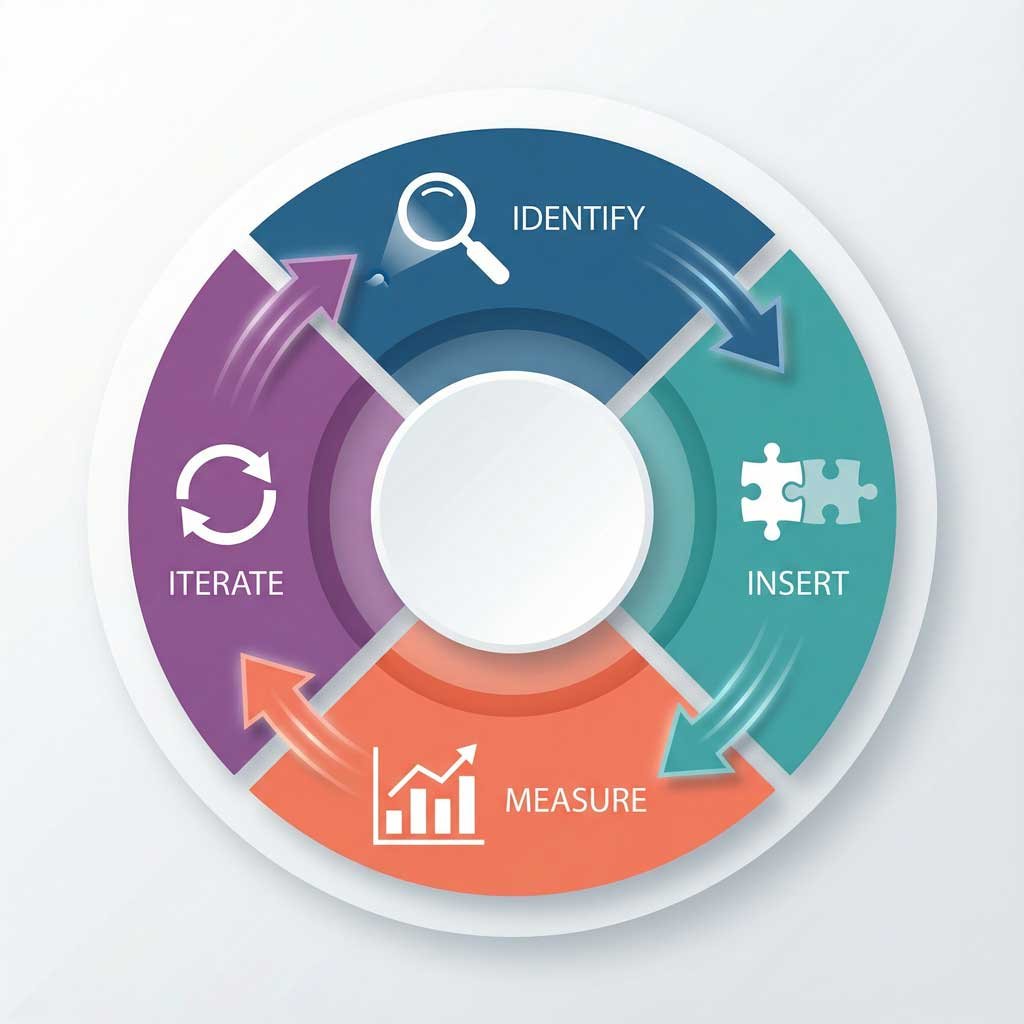
Insetprag is more than just a philosophy; it’s a disciplined, repeatable methodology for turning ideas into impact. This 4-step cycle is designed to be lightweight, fast, and deeply integrated with real-world feedback, ensuring that every change is a step in the right direction.
Step 1: Identify – Pinpoint the Friction
The journey begins not with a solution, but with a problem. The first step is to meticulously observe and identify a specific, high-impact point of friction within an existing system. This isn’t about finding a grand, systemic flaw. It’s about locating a small, nagging issue that, if solved, would provide disproportionate value. Great starting points are often found by asking, “What is the one thing that frustrates our users every single day?” or “Where does our internal team waste the most time?”
Step 2: Insert – Deploy a Targeted, Minimum Viable Change
Once a clear friction point is identified, the next step is to design and insert the smallest possible change to address it. This is the art of the Minimum Viable Change (MVC). It’s not about building a comprehensive feature set; it’s about deploying a targeted, surgical solution. For a confusing software interface, the MVC might be a single, well-placed tooltip, not a complete redesign. For an inefficient workflow, it could be a simple checklist template, not a new project management platform. The goal is to deliver value quickly and with minimal investment.
Step 3: Measure – Test in the Real World
An idea is just a hypothesis until it’s tested with real users. As soon as the Minimum Viable Change is deployed, the focus shifts to measurement. It is critical to track the right Key Performance Indicators (KPIs) to determine if the change had the intended effect. For the tooltip, you might measure hover-over rates or a reduction in support tickets related to that feature. For the checklist template, you could track task completion time or error rates. This data-driven approach removes ego and opinion from the equation, allowing the results to speak for themselves.
Step 4: Iterate – Adjust, Scale, or Discard
The final step is to act on the data collected. The results will determine the path forward. If the change was successful, the next iteration might involve scaling the solution to a wider audience or building upon it with another small enhancement. If it had a neutral or negative impact, the change can be easily adjusted or discarded without significant loss. This continuous feedback loop is what makes insetprag so resilient and effective. It ensures that progress is always adaptive, evidence-based, and aligned with real-world needs.
Insetprag vs. Agile: What’s the Difference?
It’s a common question: “Isn’t this just another name for Agile?” While insetprag shares the iterative spirit of Agile methodologies, they are fundamentally different in their scope and objective. Confusing them can lead to misapplication, so understanding the distinction is crucial for effective implementation.
Agile is a framework for developing new products or systems from the ground up, whereas insetprag is a framework for improving existing ones. One is about building the house; the other is about renovating it room by room.
Where They Align: The Iterative Spirit
Both methodologies are built on a foundation of iterative progress. They reject the rigid, linear approach of traditional models like Waterfall, embracing feedback loops, rapid releases, and continuous learning. Both agree that breaking down large projects into small, manageable chunks is the most effective way to manage complexity and risk.
The Key Distinction: Embedding vs. Building
The core difference lies in their primary focus. Agile is optimized for building new things. It excels in environments where the end product is not fully defined and requires exploration and adaptation. In contrast, insetprag is optimized for enhancing existing things. Its strength lies in making established systems more efficient, user-friendly, and effective without the need for a complete teardown.
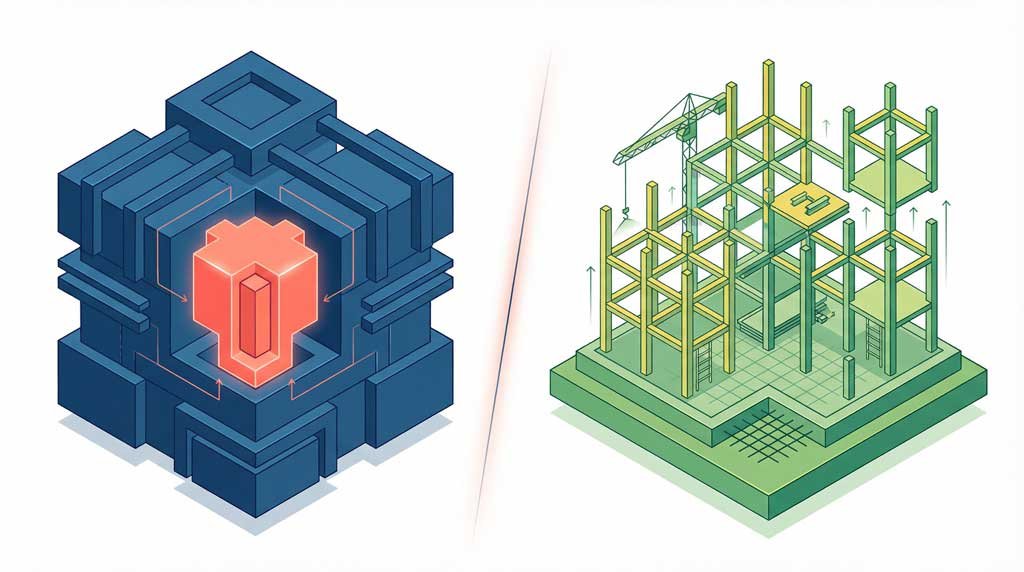
This table breaks down the key differences:
| Feature | Insetprag | Agile | Waterfall |
|---|---|---|---|
| Primary Goal | Enhance an existing system | Build a new product/system | Deliver a predefined project |
| Scope | Small, targeted improvements | Sprints/features for a larger product | Entire project scope defined upfront |
| System Impact | Low; works within existing structure | High; creates new structures | Very high; complete system delivery |
| Risk Profile | Very Low; changes are small and reversible | Moderate; sprints can fail or need rework | High; failure is discovered late |
| Starting Point | An existing, functional system | A product vision or backlog | A fixed set of requirements |
| Analogy | Renovating a room | Building a new house | Following a complete blueprint |
Real-World Applications: Where Insetprag is Making an Impact
Theory is one thing, but results are another. The true power of the insetprag framework is revealed when it is applied to solve real-world problems. By focusing on small, high-leverage changes, organizations across various industries are achieving significant gains without the cost and risk of massive overhauls. These examples illustrate how targeted, pragmatic improvements can lead to major breakthroughs.
Case Study 1: Transforming E-commerce UX
The Company: An online fashion retailer.
The Friction: Data analysis revealed a high cart abandonment rate, with over 75% of users dropping off at the final payment page. Customer feedback pointed to a long and confusing multi-step checkout process as the primary culprit.
The Insetprag Solution: Instead of a complete redesign of the checkout flow, which would have taken months, the team decided to insert a single, targeted feature: a “Pay with Link” one-click payment option. This allowed returning customers to bypass the form-filling entirely.
The Result: The change was implemented in just two weeks. A/B testing immediately showed a 22% reduction in cart abandonment for users who saw the new option. This single, embedded feature directly translated into a multi-million dollar increase in annual revenue.
Case Study 2: Streamlining Business Operations
The Organization: A mid-sized marketing agency.
The Friction: The internal process for creating weekly client reports was manual, time-consuming, and prone to errors. Each account manager spent, on average, four hours per week copying and pasting data into a slide deck.
The Insetprag Solution: Rather than investing in a costly new reporting software, the operations team introduced a set of automated Google Sheets templates. These templates pulled data directly from their analytics platforms via an existing API, automatically populating the key charts and metrics.
The Result: The new templates were rolled out in a single afternoon. The time spent on weekly reporting dropped from four hours per manager to just 30 minutes, representing a nearly 90% reduction in administrative workload. This freed up hundreds of hours per month for more strategic, client-facing activities.
Case Study 3: Enhancing Smart Home Technology
The Product: A popular smart home lighting system.
The Friction: While the system was powerful, users complained that setting up complex lighting “scenes” (e.g., for watching a movie) was too complicated, requiring multiple taps within the app. Feature adoption for advanced scenes was below 5%.
The Insetprag Solution: The development team didn’t add more options. Instead, they embedded a simple, intuitive feature. They added a single voice command—”Hey, turn on movie mode”—that automatically dimmed the main lights, activated the bias lighting behind the TV, and set them to a soft blue.
The Result: After the next software update, usage of the “movie mode” scene skyrocketed. Within a month, it became one of the most-used features in the entire system, with user satisfaction scores for the product increasing by 15 points. It was a powerful reminder that sometimes the best innovation is simplification.
Your Step-by-Step Guide to Implementing Insetprag
Adopting the insetprag methodology doesn’t require a massive budget or a complete organizational restructuring. It’s about cultivating a new mindset and taking a disciplined, step-by-step approach to improvement. This guide provides a practical roadmap for introducing and scaling insetprag within your team or organization.
Phase 1: Cultivate the Insetprag Mindset
Before you write a single line of code or change a single process, the first step is cultural. Leadership must champion the idea that small, iterative improvements are just as valuable—if not more so—than large, disruptive projects. Encourage your team to think like surgeons, not demolition experts. The goal is to find and fix, not to tear down and rebuild. This mindset shift is the foundation upon which all successful insetprag initiatives are built.
Phase 2: Assemble a Cross-Functional Team
Your first insetprag team should be small, nimble, and cross-functional. It should include not just the builders (engineers, designers) but also the people who are closest to the problem: customer support representatives, sales staff, and the end-users of the system themselves. This diversity of perspective is critical for accurately identifying friction points and designing solutions that work in the real world.
Phase 3: Create Your “Friction Log”
A Friction Log is a simple but powerful tool for capturing potential insetprag opportunities. It’s a shared document or channel where any team member can log a small, frustrating inefficiency they encounter. Each entry should be simple, answering three questions: 1) What was the task? 2) What made it difficult? 3) What was the impact? This log becomes a democratized backlog of high-value problems waiting to be solved.
Phase 4: Launch Your First Insetprag Sprint
Select one well-defined problem from your Friction Log and launch a short, focused “insetprag sprint.” The goal is to go through the entire 4-step cycle (Identify, Insert, Measure, Iterate) in a compressed timeframe, typically one to two weeks. This first sprint is as much about learning the process as it is about solving the problem. Keep the scope ruthlessly small and focus on getting to the measurement phase as quickly as possible.
Phase 5: Communicate and Celebrate the Wins
When your first insetprag initiative delivers a measurable win—no matter how small—it’s crucial to communicate and celebrate it widely. Share the data. Show the before-and-after. This builds momentum and demonstrates the value of the approach to the rest of the organization. These early wins are the fuel that will power future, more ambitious insetprag projects.
Frequently Asked Questions (FAQ)
- 1. What exactly is insetprag and where did it come from?
- Insetprag is a framework for embedding small, practical improvements into existing systems. The term combines “inset” (to embed) and “prag” (pragmatism). Its conceptual roots are in methodologies like Agile development, UX design, and lean manufacturing, but it is uniquely focused on enhancing current systems rather than building new ones from scratch.
- 2. How does insetprag differ from Agile or Kaizen?
- While they all share an iterative spirit, the key difference is scope. Agile is a framework for managing large, complex projects to build new products. Kaizen is a broad philosophy of continuous improvement across an entire organization. Insetprag is a specific methodology for making targeted, surgical enhancements to existing, functional systems to improve their performance and usability.
- 3. What are the main benefits of using the insetprag framework?
- The primary benefits include significantly lower risk compared to major overhauls, faster implementation times, higher user adoption rates due to minimal disruption, and greater cost-effectiveness. It allows for continuous, evidence-based improvement while maintaining system stability.
- 4. Is insetprag only for tech companies?
- Not at all. While its roots are in software and UX, the principles of insetprag can be applied to any system or process. It is used in business operations to streamline workflows, in marketing to optimize campaigns, in manufacturing to improve assembly lines, and even in education to enhance curriculum delivery.
- 5. How do you measure the ROI of an insetprag initiative?
- The ROI of insetprag is measured by tracking specific, pre-defined Key Performance Indicators (KPIs) tied to the friction point being addressed. For example, you might measure a decrease in user-reported errors, a reduction in the time it takes to complete a task, an increase in a specific feature’s adoption rate, or an improvement in customer satisfaction scores.
The Future of Insetprag: Trends to Watch
As a framework built for an era of constant change, insetprag is itself evolving. The principles of practical, embedded innovation are being amplified by new technologies and methodologies. Looking ahead, several key trends are poised to make insetprag an even more powerful tool for organizations worldwide.
AI-Powered Insetprag
Artificial intelligence is the ultimate force multiplier for insetprag. Imagine AI systems that can automatically monitor user behavior to identify friction points in real-time, suggest potential Minimum Viable Changes, and even run A/B tests autonomously. As AI becomes more integrated into analytics and development platforms, it will transition from a tool for implementing changes to a proactive partner in the insetprag cycle, enabling a level of responsiveness and optimization that is impossible to achieve manually.
Insetprag in Non-Digital Contexts
While born in the digital world, the insetprag methodology is increasingly being applied to physical and operational contexts. In manufacturing, it’s used to make small, targeted adjustments to assembly lines that reduce waste and improve safety. In healthcare, it’s being used to refine patient care workflows for better outcomes. In education, it helps teachers make iterative improvements to their curriculum based on student performance data. The future will see insetprag become a universal language for improvement in any complex system.
The Rise of Insetprag as a Service (IaaS)
As the demand for low-risk, high-impact innovation grows, a new category of tools and services is emerging. Insetprag as a Service (IaaS) platforms will offer specialized software for managing Friction Logs, deploying and tracking Minimum Viable Changes, and analyzing results. Alongside these tools, a new breed of consultants specializing in the insetprag methodology will help organizations cultivate the right mindset and implement the framework effectively, making it more accessible to businesses of all sizes.
Conclusion: Stop Disrupting, Start Integrating
For too long, the narrative of innovation has been dominated by the myth of disruption. We’ve been led to believe that true progress requires tearing down what exists to make way for the new. But as the 70% failure rate of transformation projects shows, this approach is often wasteful, risky, and disconnected from the real-world needs of users and organizations.
Insetprag offers a more mature, sustainable, and ultimately more effective path forward. It’s a framework that respects the complexity of existing systems and recognizes that the most profound changes often come from small, intelligent enhancements, not seismic shifts. By choosing to integrate rather than disrupt, you can drive continuous, measurable improvement while keeping your systems stable and your users happy.
Ready to try insetprag? You don’t need a grand strategy or a massive budget. Start by identifying one small point of friction in your daily workflow. Use our checklist, apply the 4-step methodology, and see the difference for yourself. The era of smart innovation is here, and the insetprag methodology is your first, most pragmatic step.
References
- Boston Consulting Group. (2020). Flipping the Odds of Digital Transformation Success. https://www.bcg.com/publications/2020/flipping-the-odds-of-digital-transformation-success
- Agile Manifesto. (2001). Manifesto for Agile Software Development. https://agilemanifesto.org/
- Nielsen Norman Group. (2023). The Definition of User Experience (UX). https://www.nngroup.com/articles/definition-user-experience/
- Lean Enterprise Institute. (n.d.). What is Lean?. https://www.lean.org/whats-lean/